
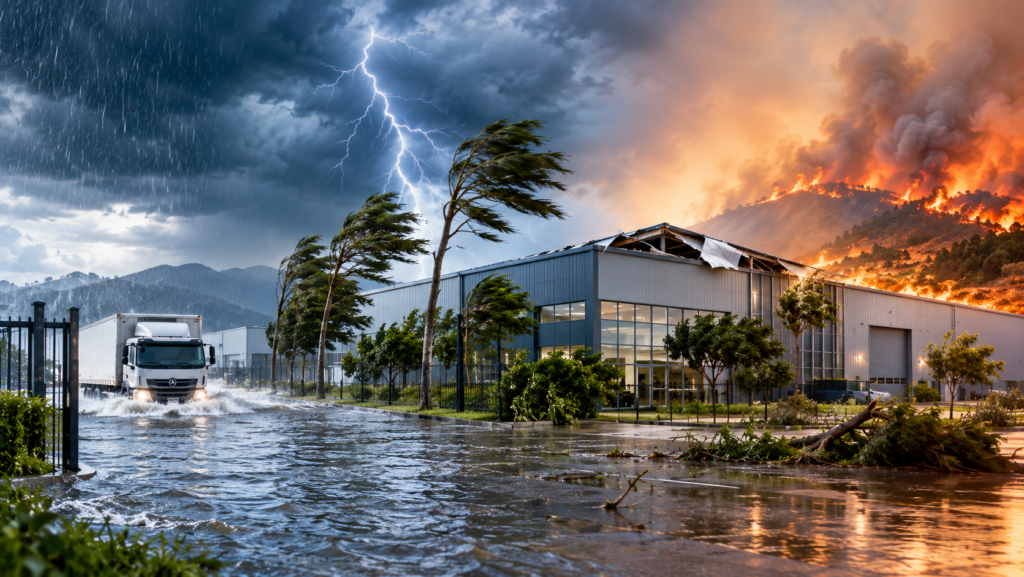
Across South Africa and around the world, businesses and property owners are experiencing an increase in severe weather events. Whether linked directly to climate change or broader shifts in weather patterns, storms, floods, wildfires and damaging wind events are becoming increasingly difficult to ignore.
Recent years have demonstrated how quickly extreme weather can disrupt operations, damage property and interrupt supply chains. Heavy rainfall can result in flooding, while strong winds can cause extensive structural damage to buildings, roofs, signage and equipment.
In many regions, prolonged dry conditions have also increased the risk and severity of wildfires.
Extreme weather is no longer limited to traditionally high-risk areas. Wind damage, hail, flooding and wildfire losses are increasingly being experienced in regions where such events were previously considered unusual or infrequent.
The increasing frequency and severity of weather-related losses is impacting insurers and global reinsurers, contributing to stricter underwriting requirements and rising insurance costs for businesses and property owners.
The financial impact extends beyond the cost of repairing physical damage. Businesses may face interrupted operations, delays in project delivery, reduced productivity and increased costs associated with temporary relocation or recovery efforts.
As weather-related risks continue to evolve, organisations should regularly assess whether their properties and risk management measures remain appropriate. This includes reviewing drainage systems, vegetation management, roof maintenance, emergency response procedures and business continuity plans.
Insurance remains an important part of this process, but preparation is equally important. Understanding your exposure, identifying vulnerabilities and implementing preventative measures can significantly reduce the impact of severe weather events.
Organisations that understand their exposure before a loss occurs are generally far better positioned to protect assets, maintain operations and recover more quickly when severe weather strikes.
In an environment where weather patterns are becoming increasingly unpredictable, resilience is no longer optional. It has become an essential component of effective risk management.